From Pixels to Poker Tables: Interface Designs Influencing Player Patterns in Digital and Live Settings
Written by Vera Klein · Nov 6, 2026
From Pixels to Poker Tables: Interface Designs Influencing Player Patterns in Digital and Live Settings
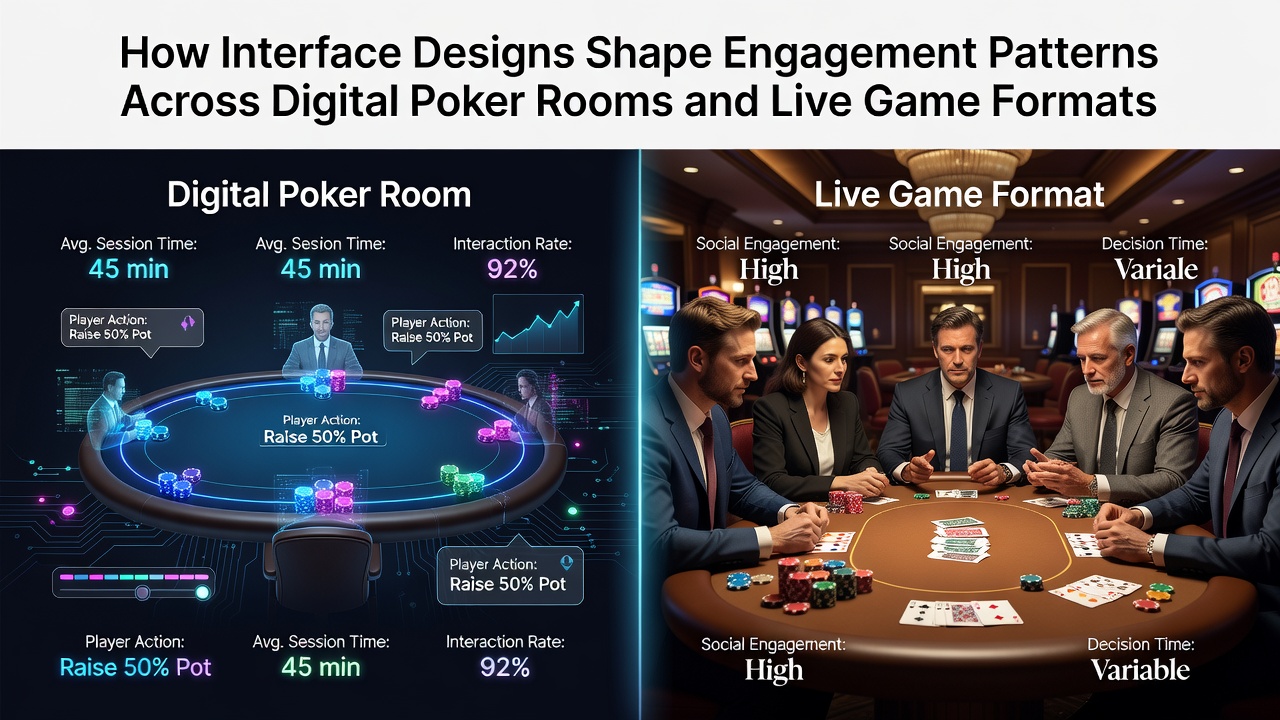
Interface designs in poker environments determine how participants interact with the game, and data from multiple markets shows measurable differences in session lengths and decision speeds between digital platforms and physical venues. Digital rooms rely on screen layouts, button placements, and animation timings that guide player actions, while live formats use table arrangements, lighting setups, and dealer positioning to shape the same behaviors.
Digital Poker Room Layouts and Player Flow
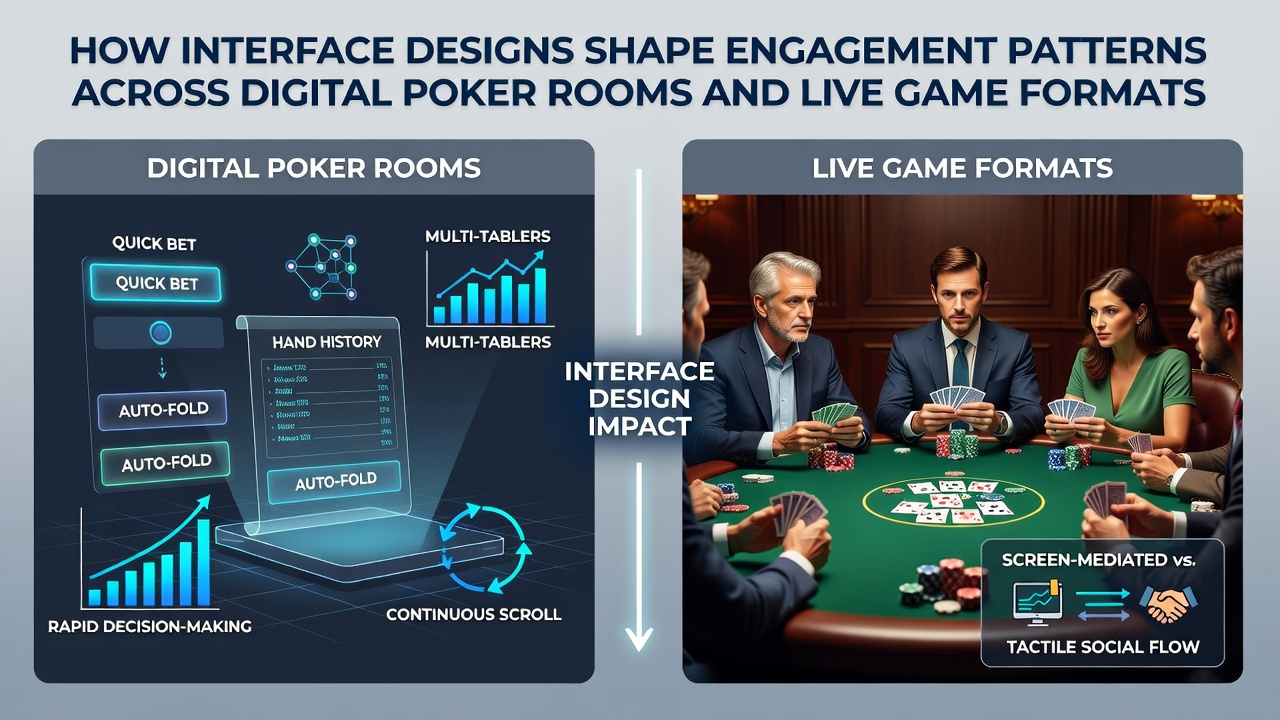
Screen-based poker rooms arrange multiple tables in grid or tabbed formats that let users switch between games without leaving the application, and this structure reduces downtime between hands according to industry reports. Button sizes for fold, call, and raise sit in fixed positions at the bottom of the display, which shortens reaction times compared with physical card handling, while color-coded bet sliders allow quick adjustments to wager amounts during tournaments. Animations that reveal community cards or highlight active players maintain visual attention, and developers adjust fade speeds so the interface feels responsive without overwhelming the user.
Multi-window options appear in many applications, enabling simultaneous participation in cash games and sit-and-go events, and tracking tools display real-time statistics such as hand histories and opponent tendencies directly on the screen. These features increase the volume of decisions per minute, which studies link to higher engagement metrics when the layout avoids clutter and keeps essential controls within thumb reach on mobile devices.
Live Game Table Arrangements and Physical Cues
Traditional poker rooms position players around oval or circular tables that place every seat within clear sightlines of the dealer and the community cards, and this geometry supports continuous observation of betting patterns and body language. Lighting focuses on the felt surface while keeping surrounding areas dimmer, which directs attention to the action and reduces external distractions during extended sessions. Chip racks and card shoes occupy consistent spots that allow dealers to maintain a steady rhythm, and observers note that these fixed placements help players anticipate the pace of play without needing verbal prompts.
Seating charts in larger venues often group similar stake levels together, and this clustering creates natural progression paths for players moving between limits, while proximity to service stations influences break frequency and overall session duration. Research from the University of Nevada Las Vegas indicates that table spacing and dealer visibility correlate with longer average playing times in regulated North American casinos.
Comparative Effects on Decision Speed and Retention
Digital interfaces compress the time between actions through instant card delivery and automated pot calculations, whereas live tables introduce natural pauses for shuffling and chip counting that alter the rhythm of choices. Data collected across platforms shows digital users complete more hands per hour, yet live participants report higher retention when physical cues such as stack visibility and opponent positioning provide additional context for strategy adjustments. Both formats incorporate elements that reduce cognitive load, but the mechanisms differ: screen-based tools offer numerical overlays, while table designs emphasize spatial awareness and direct interaction.
November 2026 figures from the Australian Communications and Media Authority reveal that mobile poker applications with streamlined navigation recorded 14 percent longer average sessions than those with more complex menu structures, and similar patterns appear in land-based venues where redesigned table layouts improved table occupancy rates. These outcomes stem from interface choices that match the sensory preferences of each environment rather than from any single design principle.
Adaptations Across Formats and Emerging Trends
Hybrid approaches now appear in some markets, where live-streamed tables display digital overlays for remote viewers while physical participants rely on standard table setups, and this dual presentation allows engagement data to be compared across both channels. Regulatory updates in several jurisdictions require clear display of betting limits and responsible gaming prompts, which designers integrate into interfaces without disrupting flow. Observers note that consistent placement of these elements across devices supports sustained participation, while live venues incorporate digital displays at tables to show pot sizes and time remaining in each betting round.
Design teams test variations in button contrast, card animation speed, and table felt textures through controlled trials, and results feed into updates that align with measured player behavior across regions. The American Gaming Association has documented how these iterative changes affect drop rates and average bet sizes in both online and brick-and-mortar settings.
Conclusion
Interface elements in digital poker rooms and live game formats shape engagement by controlling the speed, visibility, and accessibility of game actions, with measurable outcomes documented in regulatory and academic sources. Continued refinement of layouts, whether through screen controls or physical arrangements, reflects ongoing analysis of how design decisions influence participation patterns across different playing environments.